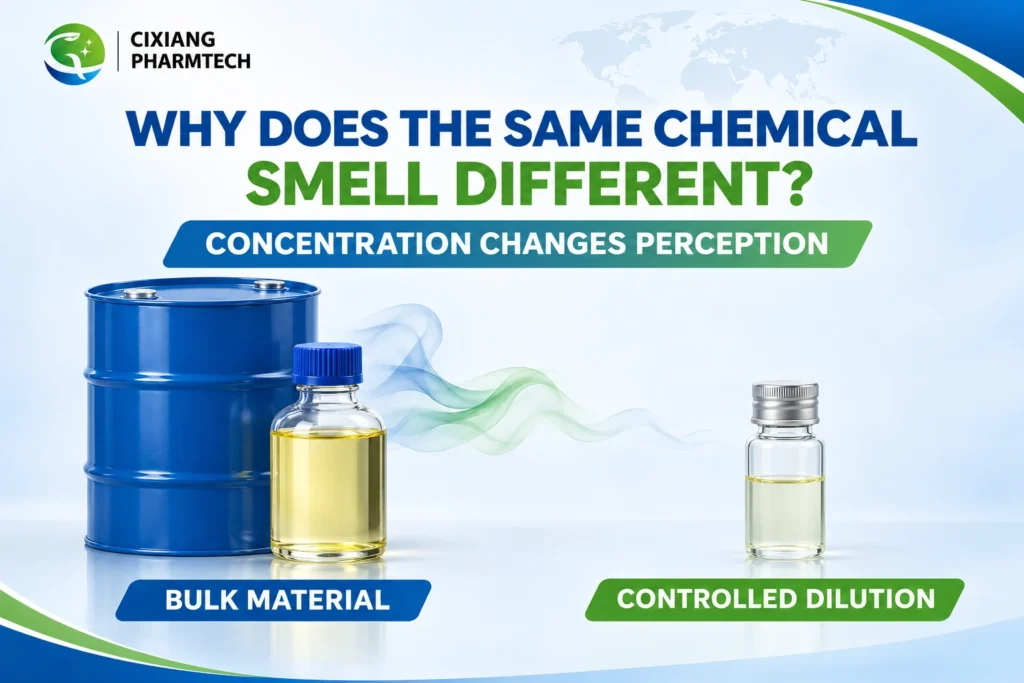
It is a situation that can easily create doubt during chemical purchasing.
A buyer receives a small sample of an aromatic chemical and evaluates it under controlled conditions. Later, the bulk shipment arrives. When the container is opened, the odor seems much stronger, sharper or less familiar than the original sample.
Does that mean the bulk material is different?
Not necessarily.
The perceived odor of an aromatic chemical is influenced not only by its chemical identity, but also by concentration, temperature, container headspace, evaluation method and individual sensitivity. A concentrated bulk material and a properly diluted sample can therefore create very different first impressions even when they originate from the same product.
Understanding this difference helps purchasing, warehouse and quality-control teams avoid making decisions based only on a subjective odor check.
Concentration Changes More Than Odor Strength
It is easy to assume that increasing concentration simply makes an odor stronger. In practice, the effect can be more complicated.
At a relatively low concentration, a characteristic odor profile may be easier to recognize. At a much higher concentration, the first impression may become intense, sharp or overwhelming. Some odor notes may dominate while others become difficult to distinguish.
This means that a concentrated material does not always smell like a louder version of its diluted form. The perceived character itself may appear different.
This is one reason why comparisons should be performed using consistent sample preparation and evaluation conditions. Comparing a diluted reference with the headspace of a newly opened drum is not a like-for-like assessment.
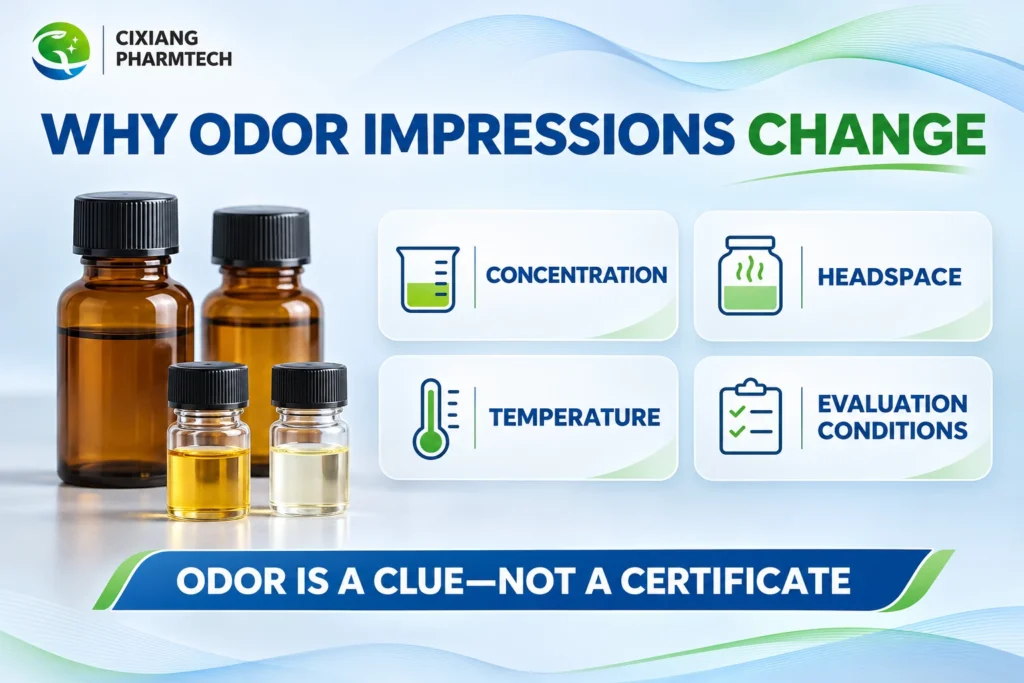
Why a Bulk Drum May Seem Different from a Sample
Several factors can change the way an aromatic chemical is perceived.
1. Different Concentrations
A commercial bulk material is normally much more concentrated than a sample prepared for controlled odor evaluation. The difference in concentration can significantly affect both perceived intensity and character.
If one sample is diluted and another is evaluated directly from its container, the results cannot be compared reliably.
2. Container Headspace
Headspace is the space above the liquid inside a container. Volatile molecules accumulate in this area while the container remains closed.
A newly opened drum may therefore release a concentrated headspace vapor. A small sample bottle that has been opened several times may contain a different vapor concentration, even if the liquid material is from the same batch.
Container size, fill level and the length of time since the previous opening can all influence the first odor impression.
3. Material Temperature
Temperature affects volatility. A warmer material may release volatile components more quickly than a cooler one.
For this reason, a sample evaluated in a temperature-controlled room should not be compared directly with a drum that has just arrived from a hot vehicle, cold warehouse or changing outdoor environment.
The material should first be handled according to the applicable storage and sampling procedure.
4. Time After Opening
The first impression immediately after opening a container may not be identical to the impression obtained after a prepared sample has equilibrated under controlled conditions.
Air exchange, sample depth and the surface area exposed during preparation can all affect the concentration of volatile molecules around the sample.
5. Individual Sensitivity and Adaptation
Odor perception varies between people. Previous exposure, fatigue, surrounding odors and temporary adaptation can affect how someone describes the same material.
After repeated exposure to a strong odor, sensitivity may decrease temporarily. Two evaluators may also use different words for a similar sensory impression.
This subjectivity makes odor an observation rather than a stand-alone analytical result.
Examples: Cinnamaldehyde and Benzaldehyde
Cinnamaldehyde is commonly associated with a characteristic cinnamon-like odor, while benzaldehyde is often described as having a bitter-almond-like odor.
However, these familiar descriptions do not mean that concentrated commercial materials will smell exactly like cinnamon bark or an almond-flavored product when a bulk container is opened.
The undiluted material may produce a much stronger and sharper impression. Only after evaluation under an appropriate, controlled procedure may the more recognizable profile become apparent.
Product grade, specification and intended industrial application must also be considered. A familiar odor description should never be interpreted as proof that a material is suitable for food, pharmaceutical or any other regulated application.
Suitability depends on the agreed specification, documentation and applicable regulatory requirements—not on odor resemblance.
Can Odor Confirm Chemical Quality?
Odor can provide useful observational information, but it cannot confirm purity, identity or conformity by itself.
There are several reasons:
- Odor perception is subjective.
- Different concentrations can produce different impressions.
- Temperature and sampling conditions influence volatility.
- Trace components may have a strong odor without representing a large percentage of the material.
- Some analytical differences may not produce an obvious sensory change.
- A normal odor does not prove that every specification item is compliant.
Similarly, an unexpected first impression does not automatically prove that the product has failed. It is a reason to investigate using a structured procedure.
What Should Buyers Check Instead?
When a bulk shipment appears different from an earlier sample, buyers should compare objective information before reaching a conclusion.
Confirm Product Identification
Check the product name, CAS number, batch number and package label against the purchase order and approved specification.
Review the Certificate of Analysis
Confirm that the COA corresponds to the delivered batch and reports the test items agreed during purchasing.
Compare Samples Under Consistent Conditions
If an odor comparison is part of the agreed inspection procedure, the reference and delivered samples should be prepared using the same method, concentration, container type, temperature and evaluation time.
Use Appropriate Analytical Testing
Identity, assay and related substances should be evaluated using the methods specified in the purchase agreement or internal quality procedure.
For many aromatic chemicals, gas chromatography may be one of the relevant analytical tools, but the exact testing requirements must follow the agreed specification.
Check Packaging and Storage History
Inspect the closure, seal, label and container condition. Review whether the shipment experienced unusual heat, leakage, contamination or prolonged exposure after opening.
Safety Comes Before Sensory Evaluation
Bulk chemicals should never be evaluated by placing the face close to an open drum or directly inhaling concentrated vapor.
Any sampling or sensory observation must follow the current Safety Data Sheet, site procedures and applicable occupational-safety requirements. Work should be carried out by trained personnel using suitable ventilation, protective equipment and approved sampling methods.
If odor evaluation is not part of an established quality procedure, analytical testing and supplier communication are safer and more reliable ways to investigate a concern.
A Better Supplier–Buyer Comparison Checklist
Before comparing a pre-shipment sample with bulk material, both parties should confirm:
- Are the samples from the same product specification?
- Are the batch numbers recorded?
- Were both samples stored correctly?
- Are they being compared at the same concentration?
- Are the container type and sample quantity comparable?
- Are the temperature and evaluation time controlled?
- Does the delivered batch meet the agreed analytical limits?
This approach helps separate a genuine quality issue from a difference caused by sample preparation or perception.
Odor Is a Clue, Not a Certificate
The odor of an aromatic chemical can be valuable information, but it must be interpreted in context.
A concentrated drum, a small sample bottle and a controlled dilution may all produce different sensory impressions. Concentration, headspace, temperature and the evaluator can influence what is perceived.
For reliable acceptance decisions, buyers should combine observations with product identification, batch traceability, COA review, packaging inspection and appropriate analytical testing.
Cixiang Pharmtech supplies cinnamaldehyde, benzaldehyde and other cinnamon-series raw materials and chemical intermediates. For current specifications, COA availability, packaging information or sample inquiries, please contact our team.
Website: www.cinnamates.com