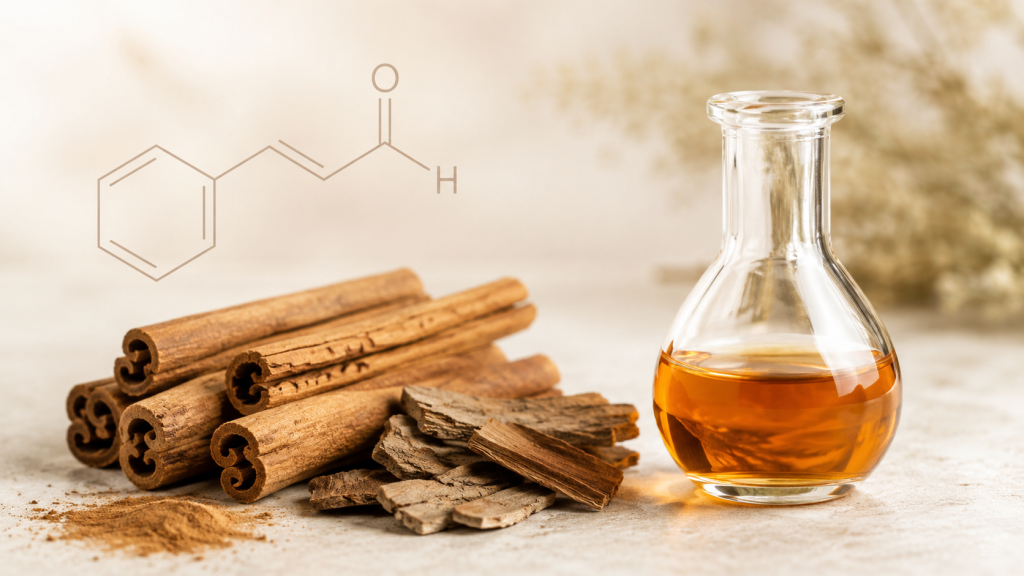
Cinnamaldehyde is one of the most representative aroma chemicals in the cinnamic series. For many people, the first impression of cinnamaldehyde comes from its warm, sweet, spicy, and distinctive cinnamon-like scent. It is one of the key components responsible for the characteristic aroma of cinnamon and cassia.
Today, cinnamaldehyde is not only valued as a fragrance and flavor ingredient, but also recognized as an important fine chemical raw material. With its unique aromatic profile and reactive chemical structure, cinnamaldehyde plays a meaningful role in fragrance, flavor, personal care, household products, fine chemicals, and related downstream derivatives.
1. What Is Cinnamaldehyde?
Cinnamaldehyde is an aromatic aldehyde compound with a typical cinnamon-like odor. Its scent profile is warm, spicy, sweet, and slightly woody, making it highly recognizable in many fragrance and flavor systems.
From a chemical perspective, cinnamaldehyde contains a benzene ring, a carbon-carbon double bond, and an aldehyde group. This structure gives the molecule both its characteristic aroma and its ability to participate in different chemical reactions.
In industrial applications, cinnamaldehyde can be obtained from natural sources or produced through synthetic routes. Natural cinnamaldehyde is mainly found in cinnamon oil and cassia oil, while synthetic cinnamaldehyde is widely used because of its stable supply, consistent quality, and suitability for large-scale production.

2. Why Does Cinnamaldehyde Have Such a Distinctive Aroma?
The most notable feature of cinnamaldehyde is its strong cinnamon character. It is not simply sweet, woody, or spicy. Instead, it combines warmth, sweetness, spice, and a slight balsamic nuance, creating a rich and memorable aroma.
In fragrance formulation, cinnamaldehyde is often used to create warm, spicy, oriental, woody, or sweet-spicy accords. It can enhance diffusion, add depth, and make a fragrance composition more vivid and recognizable.
In flavor applications, cinnamaldehyde is closely associated with cinnamon, baked goods, apple, nuts, confectionery, beverages, and dessert-type flavors. It helps create a familiar warm note and improves the overall richness of the flavor profile.
3. Applications of Cinnamaldehyde in Fragrance
Fragrance is one of the major application areas for cinnamaldehyde. Because of its strong and characteristic odor, cinnamaldehyde is commonly used in fine fragrances, personal care products, household cleaning products, air care, and home fragrance formulations.
In perfumes and daily-use fragrance products, cinnamaldehyde is often found in oriental, spicy, woody, and seasonal fragrance types. It adds warmth and personality, helping the fragrance feel more layered and expressive.
In home fragrance and air care products, cinnamaldehyde is often used to build a cozy, warm, and slightly sweet-spicy atmosphere. It is especially suitable for winter scents, festive fragrance concepts, bakery-inspired accords, and warm household fragrance profiles.
4. Applications of Cinnamaldehyde in Flavor
Cinnamaldehyde also has strong relevance in the flavor industry. Many familiar products, such as cinnamon rolls, apple pies, baked desserts, candies, beverages, and seasoning products, may contain cinnamon-like flavor characteristics related to cinnamaldehyde.
In flavor systems, cinnamaldehyde provides a typical cinnamon note, spicy warmth, and sweet aromatic character. It can make the flavor more rounded, recognizable, and appealing.
However, flavor applications require strict attention to regulatory compliance, purity, safety standards, and recommended usage levels. When cinnamaldehyde is used in food-related products, it should be selected and applied according to the regulations of the target market and the requirements of the final product formulation.
5. The Value of Cinnamaldehyde in Fine Chemicals
Beyond aroma and flavor, cinnamaldehyde is also an important fine chemical intermediate. Due to the presence of an aldehyde group and an unsaturated carbon-carbon double bond, it can take part in a variety of chemical reactions.
Within the cinnamic series product family, cinnamaldehyde is closely connected with cinnamic acid, cinnamyl alcohol, cinnamate esters, and other derivatives. Through oxidation, reduction, esterification, and other reactions, cinnamaldehyde can be used to develop different downstream products.
This is one reason why cinnamaldehyde has strong industrial value. It is not only a fragrance or flavor ingredient, but also a key starting material for multiple cinnamic series derivatives.
6. Why Synthetic Cinnamaldehyde Matters
As downstream industries place higher demands on product consistency, stable supply, and batch-to-batch reliability, synthetic cinnamaldehyde has become increasingly important in industrial applications.
Compared with naturally sourced products, synthetic cinnamaldehyde is more suitable for large-scale manufacturing and continuous supply. For fragrance houses, flavor companies, personal care manufacturers, and fine chemical users, stable quality and reliable delivery are essential for product development and production planning.
Synthetic cinnamaldehyde also helps reduce dependence on the fluctuation of natural raw materials. Natural essential oil products may be affected by origin, season, climate, harvest conditions, and global supply-demand changes, while synthetic production can provide a more controllable supply chain.
7. How to Evaluate Cinnamaldehyde Quality
For buyers and formulators, the quality of cinnamaldehyde is not only reflected in assay or purity. Odor profile, color, impurity control, stability, and batch consistency are also important factors.
A high-quality cinnamaldehyde product should have a clean, pure, and stable cinnamon-like aroma without obvious off-notes. For industrial use, parameters such as purity, moisture, acidity, color, and related impurities are commonly considered during quality evaluation.
Different applications may also have different requirements. Fragrance applications focus more on odor performance and formulation compatibility. Flavor applications require regulatory compliance and safety standards. Fine chemical applications may pay more attention to reaction suitability and specification stability.
8. Market Outlook for Cinnamaldehyde
Cinnamaldehyde remains one of the most important products in the cinnamic series. With the continued development of fragrance, flavor, personal care, household care, food ingredients, and fine chemical industries, demand for cinnamaldehyde is expected to remain stable across multiple application areas.
In the future, the development of cinnamaldehyde products may focus more on stable quality, greener production processes, supply chain transparency, regulatory support, and customized application services. For downstream users, choosing a reliable cinnamaldehyde supplier is not only about purchasing one raw material, but also about supporting long-term product development and production stability.
9. Conclusion
Cinnamaldehyde is a classic product with both aromatic and chemical value. It provides a warm, sweet, spicy, and highly recognizable cinnamon-like aroma, while also serving as an important intermediate for the development of cinnamic series derivatives.
From fragrance and flavor to fine chemicals and downstream synthesis, cinnamaldehyde continues to play an important role because of its unique structure and versatile applications.
For companies looking for cinnamic series raw materials, understanding the characteristics, applications, and quality requirements of cinnamaldehyde can help support better formulation development, supply chain decisions, and long-term product planning.