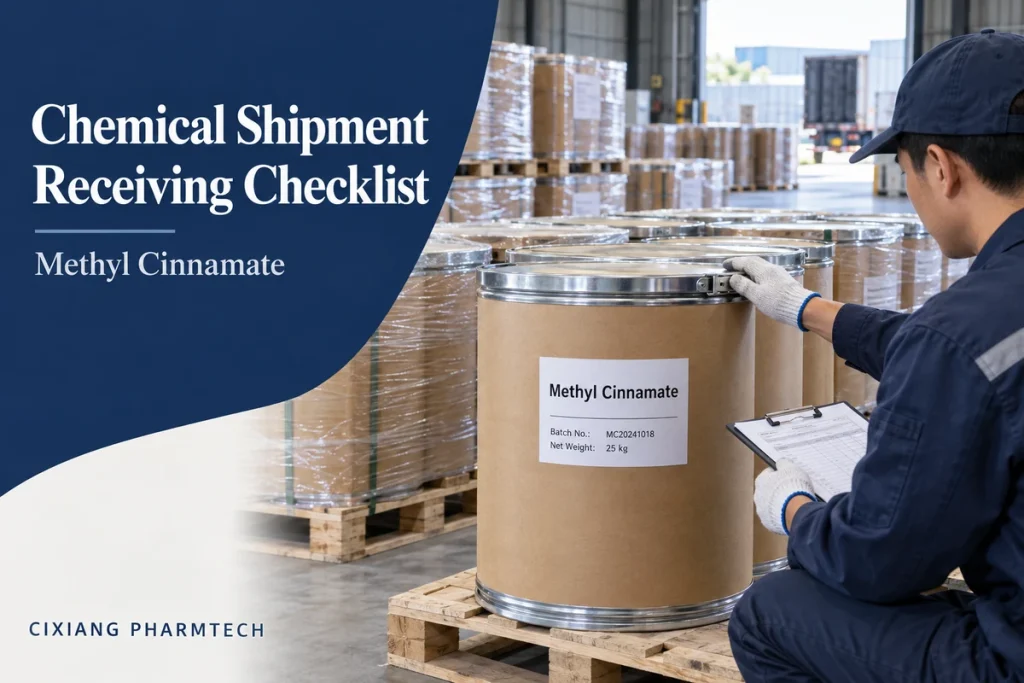
Receiving a chemical shipment involves more than counting packages and signing a delivery document. For methyl cinnamate and other solid cinnamon-series products, a structured receiving inspection helps buyers identify transport damage, confirm product traceability and prevent storage problems before the material enters production.
Here are the main points purchasing, warehouse and quality-control teams should check when a shipment arrives.
1. Inspect the Outer Packaging Before Unloading
The first inspection should begin while the goods are still on the vehicle or inside the container.
Check whether the pallets are stable and whether the drums, bags or cartons have shifted during transportation. Stretch film, straps and other securing materials should remain intact. Look for punctures, tears, crushed corners, watermarks, leakage or signs that the packaging has been opened.
Minor cosmetic marks on outer packaging do not necessarily affect product quality. However, visible moisture, damaged inner liners or exposed product require immediate attention. The affected packages should be separated and documented before acceptance.
Taking photographs during unloading can also provide useful evidence if a transport-related issue needs to be investigated later.
2. Match the Labels to the Purchase Order
Every package should be clearly connected to the material ordered.
The receiving team should confirm the following information:
- Product name: Methyl Cinnamate
- CAS number, where included in the agreed documentation
- Batch or lot number
- Net weight and number of packages
- Manufacturer or supplier information
- Production or retest information, where applicable
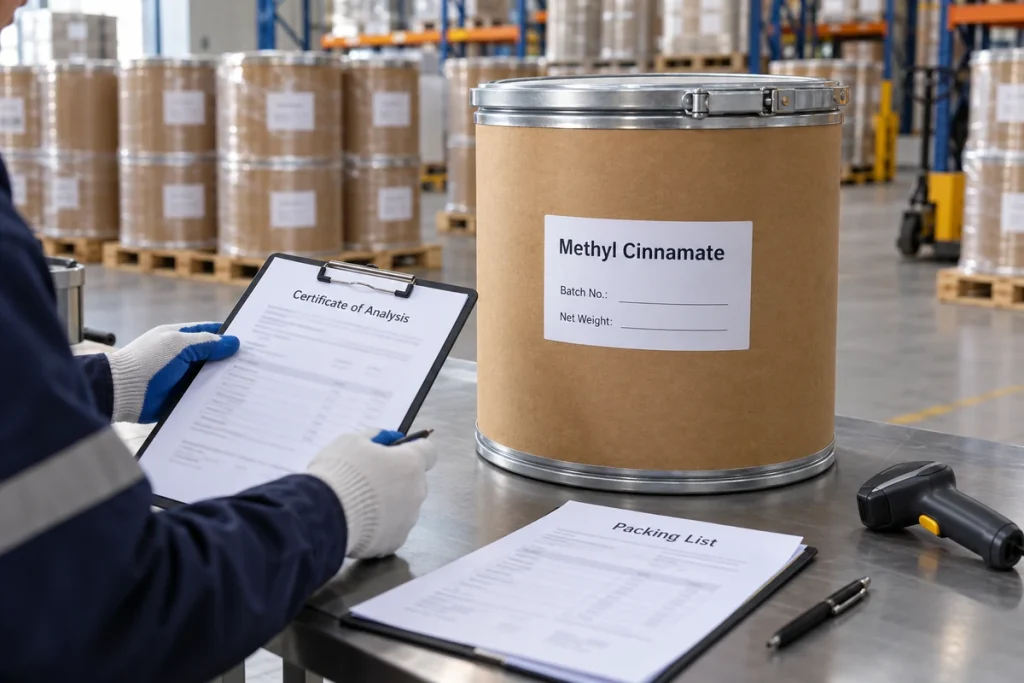
The batch number on the packaging should match the batch shown on the Certificate of Analysis. Any inconsistency should be clarified before the product is released for use.
This step is especially important for cinnamon-series products because similar chemical names do not mean that the materials are interchangeable.
3. Check the Shipment Documents
A chemical shipment should arrive with the documents agreed upon during purchasing. Depending on the order and market requirements, these may include:
- Certificate of Analysis
- Safety Data Sheet
- Packing list
- Commercial invoice
- Transport documents
- Country-of-origin or other customer-requested documents
The COA should be specific to the shipped batch rather than a general product specification. Buyers should compare the reported results with the previously agreed limits, paying attention to identity, assay, appearance, moisture and other application-relevant parameters.
Receiving documents should also be retained with the warehouse and quality records so that the material remains traceable throughout its use.
4. Does Caking Mean the Product Has Failed?
Solid chemical products may experience pressure, vibration and temperature changes during transportation. As a result, powders, flakes or crystalline materials can sometimes arrive with a degree of compaction or caking.
Caking alone does not automatically mean that methyl cinnamate has degraded or failed its specification. Its significance depends on several factors, including storage conditions, packaging integrity, moisture exposure and the requirements of the customer’s process.
The receiving team should consider:
- Has the product changed colour?
- Is there an unusual or inconsistent odour?
- Is the inner packaging damaged or damp?
- Can the compacted material be broken apart normally?
- Do the assay, moisture and other test results still meet specification?
- Will the physical condition affect weighing, dissolution or processing?
The appearance of the product should therefore be evaluated together with analytical results and intended use. A visual check by itself cannot confirm chemical quality.
If the material appears significantly different from an approved sample or previous batches, the buyer should quarantine the affected packages and contact the supplier before using them.
5. Sample the Material Correctly
Sampling should follow the buyer’s internal quality procedures and should be carried out by trained personnel using clean, suitable equipment.
Samples must be traceable to the shipment and batch. If several packages are sampled, the package numbers and sampling locations should be recorded. This helps identify whether an unusual result affects the entire batch or only a specific package.
For sensitive applications, customers may compare the incoming material with an approved reference sample or test it under actual process conditions. A product that meets a general commercial specification should still be evaluated against the buyer’s specific formulation or synthesis requirements.
6. Store the Product Promptly
After acceptance, methyl cinnamate should not remain unnecessarily exposed on the unloading platform or in an open container.
The packages should be moved to a suitable storage area and kept properly sealed. Storage conditions must follow the current product-specific SDS and the supplier’s recommendations. In general, buyers should protect chemical materials from moisture, contamination, unnecessary heat and direct sunlight.
Damaged packages should not simply be returned to normal stock. They should be identified, isolated and evaluated before a decision is made.
Why Receiving Inspection Matters
Many supply problems are first discovered at the customer’s warehouse rather than during production. A damaged liner, mismatched batch number or missing document may appear to be a small issue, but it can affect traceability, production planning and final-product consistency.
A good receiving process connects four things: the physical goods, the package labels, the quality documents and the purchase specification.
At Cixiang Pharmtech, we understand that reliable supply does not end when the goods leave the facility. Careful packaging, clear batch identification and complete shipment documentation help customers receive and evaluate methyl cinnamate with greater confidence.
For product specifications, samples, packaging options or bulk supply enquiries, please contact our team.