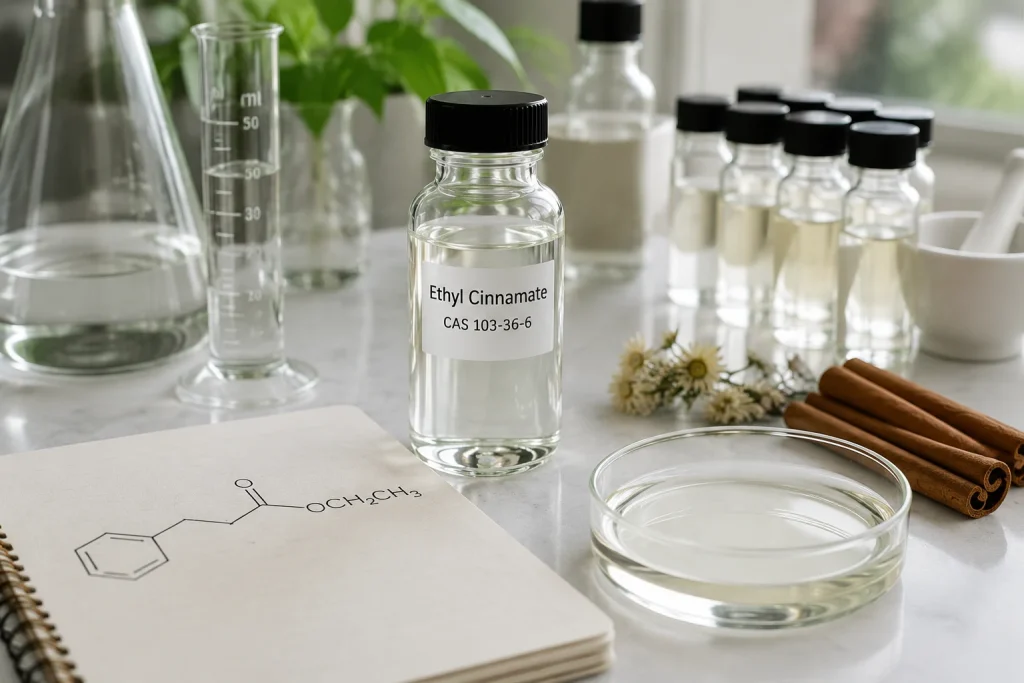
When people think about cinnamon, they often imagine the warm and familiar scent of cinnamon sticks. But behind many aromatic experiences are countless small molecules quietly shaping the final impression.
Ethyl Cinnamate is one of those interesting molecules.
Known for its sweet, fruity, balsamic, and slightly spicy aroma, Ethyl Cinnamate is a classic cinnamate ester widely used in fragrance, flavor-related applications, and fine chemical industries.
It is not the type of ingredient that always takes center stage. Instead, it works like a skilled supporting actor — adding softness, sweetness, and character to a formulation.
1. What Is Ethyl Cinnamate?
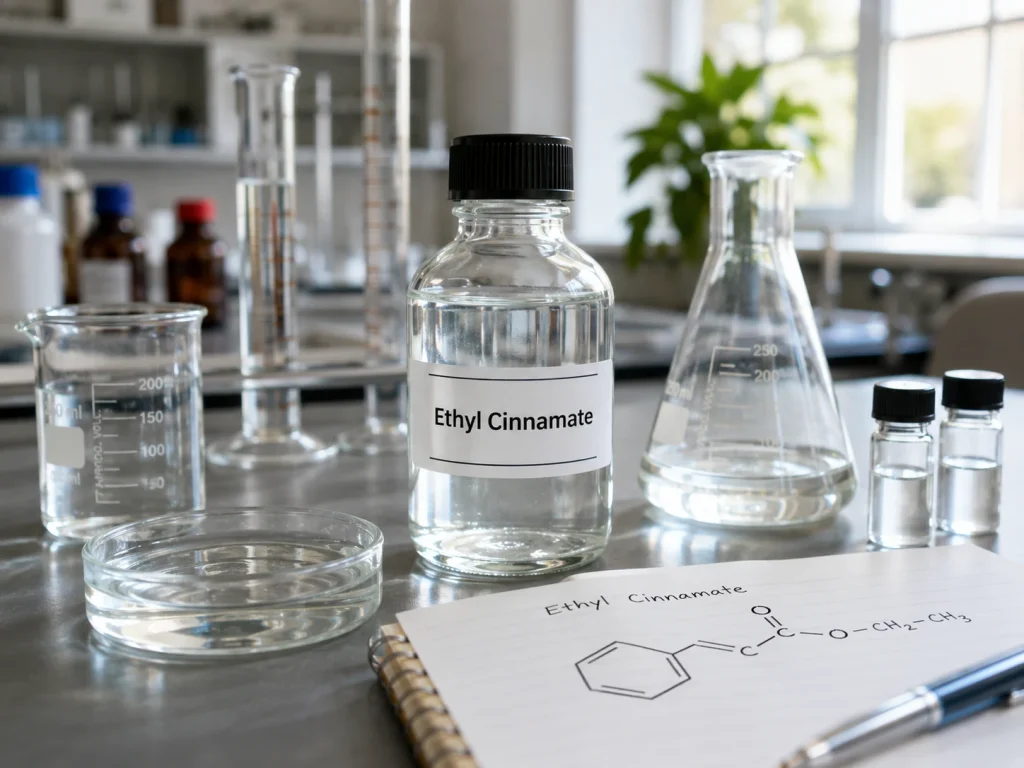
Ethyl Cinnamate, also known as Ethyl 3-phenyl-2-propenoate, is an ester derived from cinnamic acid and ethanol.
Its CAS number is 103-36-6, and it belongs to the cinnamate ester family, a group of compounds known for their pleasant aromatic properties and versatile chemical applications.
The molecular structure of Ethyl Cinnamate contains an aromatic ring and an ester group, giving it both fragrance characteristics and chemical stability.
In appearance, Ethyl Cinnamate is typically a colorless to pale yellow liquid or crystalline material depending on temperature and purity. It is valued for its sweet, fruity, balsamic, and warm aroma profile.
2. What Makes Ethyl Cinnamate Special?
The charm of Ethyl Cinnamate comes from its balanced aroma.
Unlike some aroma chemicals that are extremely strong and immediately noticeable, Ethyl Cinnamate provides a smoother and more elegant character.
Its odor is often described as:
Sweet and fruity
Balsamic and slightly spicy
Warm with a soft floral background
This combination allows it to blend well with different fragrance directions.
A good fragrance is often not created by one powerful ingredient. It is created by many carefully selected materials working together. Ethyl Cinnamate is one of those materials that helps bring harmony to the final composition.
3. Applications in Fragrance
Ethyl Cinnamate has long attracted attention in fragrance formulation because of its pleasant sweet and balsamic notes.
It can be used in creating:
Floral fragrance profiles
Fruity accords
Warm oriental scents
Sweet and balsamic compositions
Its smooth aroma makes it suitable for perfumes, personal care products, household fragrances, and other scented products.
For fragrance professionals, the value of Ethyl Cinnamate is not only its smell, but also how well it works together with other ingredients to create a complete sensory experience.
4. Applications in Flavor
Ethyl Cinnamate is also known for its flavor-related potential.
Its sweet, fruity, and balsamic characteristics make it relevant to flavor concepts such as fruit, cherry, berry, and sweet aromatic profiles.
In flavor formulation, balance is everything. A good flavor ingredient should provide the desired note while blending naturally with other components.
Of course, any food-related application must follow the regulations and requirements of the target market. Product compliance, documentation, and proper usage levels are essential considerations.
5. The Connection with the Cinnamic Series
Ethyl Cinnamate is an important member of the cinnamic series.
It is closely connected with other products such as:
Cinnamic Acid
Methyl Cinnamate
Benzyl Cinnamate
Cinnamaldehyde
Cinnamyl Alcohol
These products share related chemical structures but provide different characteristics and application possibilities.
This is why experience in cinnamic series manufacturing can be valuable. Understanding the relationship between different products helps suppliers better support customers with quality control, production consistency, and application knowledge.
6. Beyond Aroma: Fine Chemical Value
Although Ethyl Cinnamate is widely recognized for its aromatic properties, it also has value in fine chemical applications.
Its ester structure and aromatic characteristics make it useful in specialty chemical development and related industrial applications.
For industrial users, selecting a raw material is not only about purchasing a chemical name. They need:
Consistent quality
Reliable supply
Technical documentation
Stable production capability
These factors directly influence downstream production efficiency.
7. Why Quality Consistency Matters
In the chemical industry, consistency is one of the most important factors.
A fragrance or flavor formula may be carefully developed over months. A small difference in raw material quality can influence the final result.
That is why professional suppliers focus on:
Raw material control
Production management
Quality inspection
Batch consistency
Secure packaging
Reliable delivery
A stable supply partner helps customers reduce uncertainty and maintain smooth production.
8. Ethyl Cinnamate and Cixiang Pharmtech
Zaoyang Cixiang Pharmtech focuses on cinnamic series products, aroma chemicals, and related fine chemical raw materials.
Ethyl Cinnamate is part of our broader product portfolio, supporting customers in fragrance, flavor-related materials, fine chemicals, and industrial applications.
Together with products such as Cinnamic Acid, Cinnamaldehyde, Cinnamyl Alcohol, and other cinnamate derivatives, we continue to provide stable products and reliable supply solutions for global partners.
9. Final Thoughts
Ethyl Cinnamate may be a small molecule, but it creates a big impact in many applications.
From fragrance formulation to flavor development and fine chemical industries, this sweet and elegant ester continues to show its value.
Behind every finished product is a combination of science, chemistry, and carefully selected raw materials.
And Ethyl Cinnamate is one of those fascinating materials quietly making products better.