Cinnamyl chloride is a useful intermediate in organic synthesis, but it is also a material that requires careful identification, handling and storage. Its name is easily confused with other members of the cinnamon-derived chemical family, especially cinnamoyl chloride. However, the two compounds have different functional groups, reaction behavior and application routes.
For buyers and formulators evaluating cinnamyl chloride, understanding these differences is the first step toward selecting the correct material and using it safely.
What Is Cinnamyl Chloride?
Cinnamyl chloride, CAS No. 2687-12-9, is an organic chlorine compound with the molecular formula C₉H₉Cl and a molecular weight of 152.62 g/mol. Its structure can be written as C₆H₅–CH=CH–CH₂Cl: a phenyl group and carbon–carbon double bond are connected to a chloromethyl group.
This structure makes cinnamyl chloride an allylic chloride. The carbon–chlorine bond is located next to the double bond, giving the molecule useful reactivity in substitution and coupling reactions. Under suitable conditions, it can transfer a cinnamyl group to another molecule and serve as a building block for more complex compounds.
Cinnamyl Chloride Is Not Cinnamoyl Chloride
The English names differ by only one letter, but the substances should never be treated as interchangeable.
- Cinnamyl chloride has the structure C₆H₅–CH=CH–CH₂Cl and CAS No. 2687-12-9. It is an allylic chloride.
- Cinnamoyl chloride has the structure C₆H₅–CH=CH–COCl and CAS No. 102-92-1. It is an acid chloride.
The difference between CH₂Cl and COCl changes the compound’s reaction pathway, compatible raw materials, storage requirements and downstream products. Buyers should therefore verify the full chemical name, CAS number and structural identity rather than relying only on a similar-sounding product name.
Basic Properties of Cinnamyl Chloride
Reference data from established chemical suppliers describe cinnamyl chloride as a clear, colorless to light-yellow liquid. Typical reference properties include:
| Item | Reference Information |
|---|---|
| Chemical name | Cinnamyl chloride |
| CAS number | 2687-12-9 |
| Molecular formula | C₉H₉Cl |
| Molecular weight | 152.62 g/mol |
| Physical form | Liquid at room temperature |
| Appearance | Colorless to light-yellow clear liquid |
| Specific gravity | Approximately 1.10 |
| Water solubility | Insoluble or practically insoluble |
| Flash point | Approximately 79°C |
These values are useful for general identification, but they should not replace the specification, Certificate of Analysis or Safety Data Sheet supplied with an actual commercial batch. Reported physical data can vary with test method, product grade, isomer composition and storage condition.
Why Is Cinnamyl Chloride Useful in Organic Synthesis?
The value of cinnamyl chloride comes mainly from its reactive allylic chloride structure. In a properly designed reaction, the chlorine-containing group can participate in substitution or coupling, allowing a cinnamyl unit to be introduced into a target molecule.
This makes cinnamyl chloride useful as an intermediate rather than as a final consumer ingredient. Depending on the substrate, catalyst and reaction conditions, it may be used in routes leading to carbon–carbon or carbon–heteroatom bond formation. It can therefore support the preparation of more complex molecules for fine chemical research and manufacturing.
Reaction selectivity still matters. Allylic compounds can provide more than one possible reaction pathway, and the result may change with the nucleophile, catalyst, solvent and temperature. A successful laboratory reaction should consequently be evaluated and controlled carefully before scale-up.
Main Uses of Cinnamyl Chloride
1. Organic Synthesis Building Block
Cinnamyl chloride is used to introduce a cinnamyl group into other molecules. It can participate in reactions used to prepare cinnamyl-substituted derivatives, making it a practical building block for multi-step synthesis.
2. Fine and Specialty Chemical Intermediate
Its combination of an aromatic ring, carbon–carbon double bond and reactive chloromethyl group makes it valuable in the development of specialty organic compounds. The exact downstream use depends on the customer’s synthesis route and required product structure.
3. Pharmaceutical and Complex-Molecule Research
Cinnamyl chloride has been used in research-scale synthesis of biologically active and structurally complex molecules. In this context, it functions as a reaction intermediate or synthetic reagent, not as a finished medicine.
4. Preparation of Cinnamyl Derivatives
Under appropriate reaction conditions, cinnamyl chloride can be used in routes toward different N-, O-, S- or C-substituted cinnamyl compounds. This versatility is one reason it remains relevant to organic synthesis laboratories and fine chemical manufacturers.
It is important to note that cinnamyl chloride is not a flavoring ingredient and should not be added directly to food, cosmetics or pharmaceutical products. Its suitability must always be assessed according to the intended industrial process, applicable regulations and the supplier’s product documentation.
What Should Buyers Check Before Purchasing?
A product name and CAS number identify the substance, but they do not provide all the information needed for process evaluation. Before placing an order, buyers should review the specification and confirm which parameters matter to their own reaction.
Key items may include chemical identity, assay, appearance, color, relevant impurity limits, moisture control, isomer profile where applicable, packaging configuration and storage conditions. The Certificate of Analysis should be reviewed together with the Safety Data Sheet, while a representative sample can help confirm suitability in the buyer’s actual process.
For repeat orders, batch consistency is also important. Changes in assay, impurity profile, moisture or appearance can influence reaction conversion, selectivity, purification and final-product quality. Clear specification alignment between supplier and customer helps reduce unnecessary adjustments during scale-up and routine production.
Storage and Handling Considerations
Cinnamyl chloride is a hazardous, combustible and corrosive material. Safety documentation from established suppliers warns that exposure to its vapour can be dangerous and that the liquid can cause severe skin burns and eye damage. It should be handled only by trained personnel in an appropriately controlled industrial or laboratory environment.
The following principles are especially important:
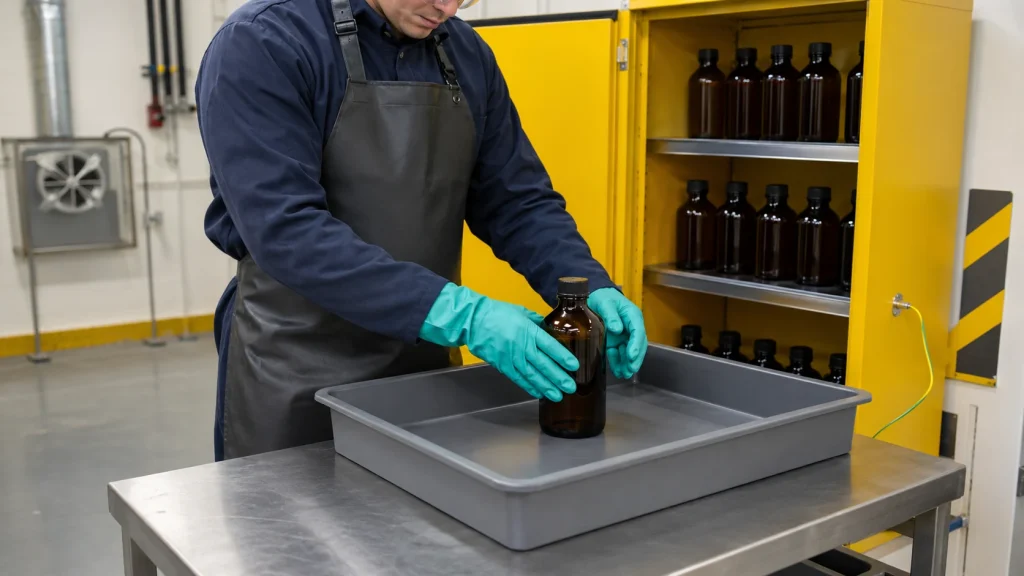
- Keep the container tightly closed in a cool, dry and well-ventilated area.
- Protect the material from heat, hot surfaces, sparks, open flames and other ignition sources.
- Use the original or another compatible corrosion-resistant container with a suitable inner lining.
- Prevent moisture exposure, and use inert-gas protection when required by the supplier’s documentation.
- Avoid breathing vapour or mist. Use suitable local exhaust ventilation and the personal protective equipment specified in the SDS.
- Restrict access and store the material securely, away from incompatible substances identified in the product-specific SDS.
- Arrange spills, contaminated packaging and unused material through trained personnel and an approved hazardous-waste route.
Exact temperature recommendations are not identical across all commercial products. Some suppliers specify refrigerated storage, while others recommend a cool, dark environment below a stated temperature. The label and SDS for the actual supplied grade must therefore take priority over generic online data.
Transportation classification, packaging group and local reporting obligations can also vary by jurisdiction and product configuration. Buyers should confirm these requirements before shipment rather than assuming that normal chemical transport conditions are sufficient.
Selecting the Right Cinnamon-Series Intermediate
Cinnamyl chloride offers useful synthetic flexibility, but its value depends on correct identification, suitable quality and disciplined handling. Understanding its allylic chloride structure helps buyers distinguish it from cinnamoyl chloride and choose the material that matches their intended reaction.
As a supplier focused on cinnamon-series aroma chemicals, pharmaceutical intermediates and chemical raw materials, Cixiang Pharmtech supports customers with product information, specification communication and supply coordination.
If you are evaluating cinnamyl chloride or another cinnamon-series derivative, contact our team with your target specification, application and packaging requirements.