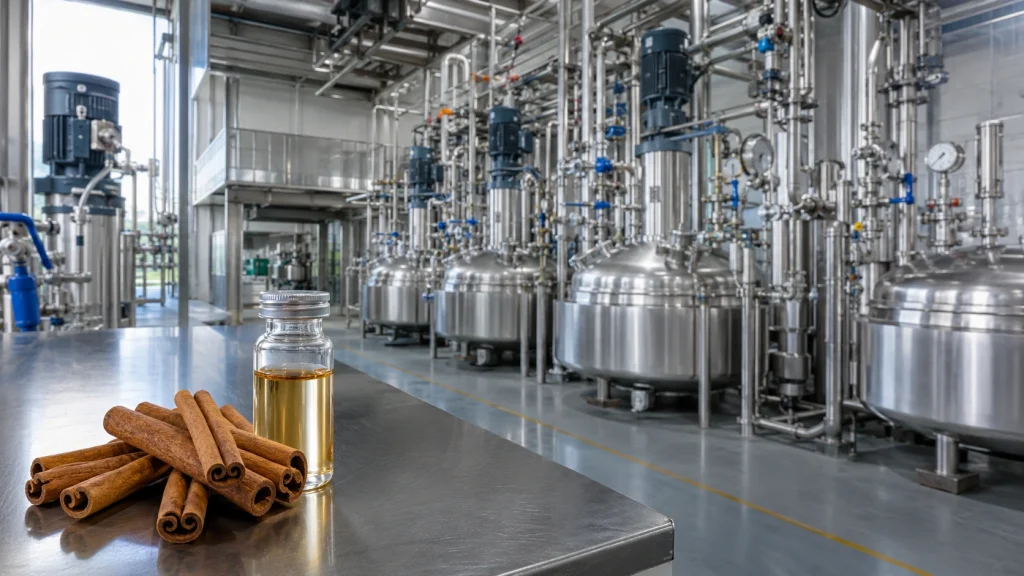
For manufacturers that use cinnamon-derived aroma chemicals and intermediates, product quality is not judged by a single successful delivery. What matters is whether the next batch performs like the previous one.
A minor variation in color, assay, physical state or aroma profile can affect downstream formulation, reaction efficiency, processing conditions and the appearance of a finished product. This is why batch-to-batch consistency is one of the most important measures of a dependable chemical supplier.
At Zaoyang Cixiang Pharmtech Co., Ltd., the cinnamon series is not simply one part of a broad catalog. It is a core product platform built around compounds such as cinnamaldehyde, cinnamic acid, potassium cinnamate, cinnamyl alcohol, methyl cinnamate, ethyl cinnamate and a range of related derivatives. Maintaining stable quality across this portfolio requires more than testing at the end of production. It depends on a controlled system that connects process understanding, automated operation, laboratory verification and continuous technical improvement.
Consistency Means Predictable Performance
Batch consistency does not mean that every production result is numerically identical. In chemical manufacturing, it means keeping the characteristics that matter to the customer within defined and repeatable limits.
For cinnamaldehyde, for example, appearance, color and assay can be important indicators of product condition. For crystalline products such as cinnamic acid, potassium cinnamate or cinnamyl alcohol, customers also expect a stable physical appearance and reliable purity. Esters such as methyl cinnamate and ethyl cinnamate must consistently meet the requirements of their intended flavor, fragrance or intermediate applications.
The relevant control points are therefore not exactly the same for every product. Our approach begins by understanding the chemistry and intended use of each material, then translating that knowledge into a repeatable production route and clear product requirements.
Standardized Processes Reduce Unnecessary Variation
Stable output starts with a stable process. If operating steps, formulas or reaction conditions are handled differently from one batch to another, variation can enter the product long before final testing begins.
Cixiang uses mature production technology together with automated production lines for its organic chemical portfolio. Standardized process requirements help operators follow the same production logic from batch to batch, while the company’s “Zhongzi” automatic control system supports precise operation, scientific formulation and safe production.
Automation is especially valuable when manufacturing cinnamon-series products because the outcome of an organic chemical process can be influenced by the interaction of several operating conditions. Closer control of these conditions improves repeatability and reduces excessive dependence on manual judgment. The purpose is not automation for its own sake; it is to make the approved process easier to reproduce at production scale.
At the same time, experienced personnel remain essential. Automated control provides stability, while production and technical teams evaluate process conditions, respond to deviations and ensure that the system is being used correctly. Consistency is strongest when standardized technology and professional oversight work together.
Product-Specific Control Across the Cinnamon Series
Although cinnamon-series materials share related chemical structures, they do not behave as one interchangeable product family. Liquids, crystalline solids, salts, esters and substituted derivatives each require attention to their own process and quality characteristics.
Cinnamaldehyde is a liquid aroma chemical widely used in flavors, fragrances and other industrial applications. Cinnamic acid is a crystalline material used in fields including flavors and fragrances, food additives, pharmaceutical production and organic synthesis. Potassium cinnamate, cinnamyl alcohol, methyl cinnamate and ethyl cinnamate each have different physical forms and downstream functions. Related products such as chlorocinnamic acids, methoxycinnamic acid and methyl-substituted cinnamates extend the series into more specialized applications.
For this reason, we do not treat batch stability as a single generic checklist. The production route and verification focus must reflect the identity, physical properties and intended specification of the individual product. This product-specific approach helps maintain consistency across a broad portfolio without overlooking the characteristics that make each compound different.
Laboratory Verification Closes the Control Loop
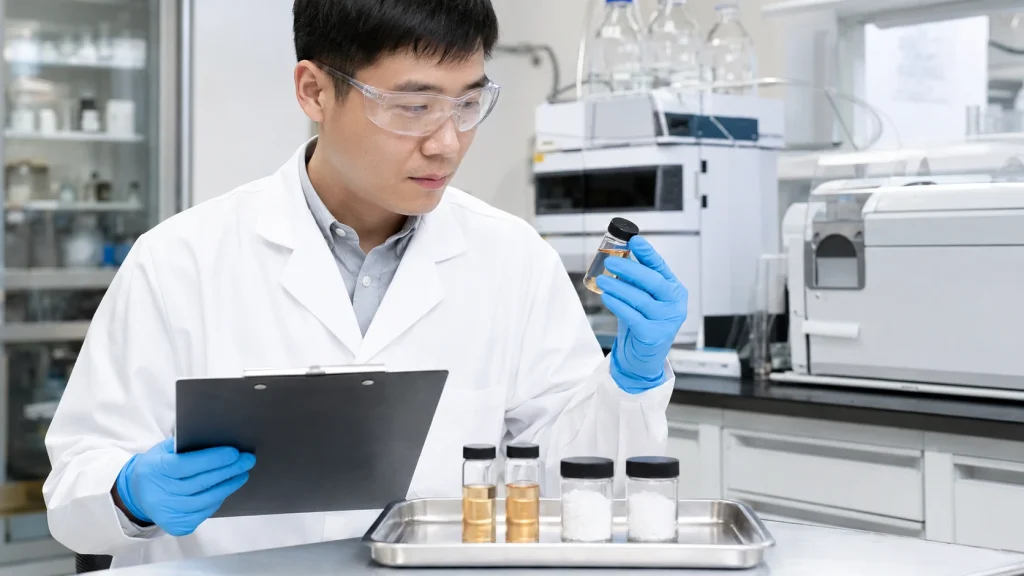
Process control creates the conditions for a stable batch, but verification is still necessary. Laboratory evaluation provides an independent check that the finished material meets the applicable quality requirements before it is released.
Batch samples are evaluated against relevant specification items, including attributes such as identity, assay and appearance as applicable to the product. The result is a closed control loop: production follows a standardized process, laboratory results confirm the output, and any meaningful difference can be reviewed by the technical team.
This relationship between manufacturing and laboratory work is important. Final testing should not be used to compensate for an unstable process. Instead, it should confirm that a well-controlled process has delivered the expected result. When process control and verification support each other, quality becomes more predictable and decisions become more traceable.
R&D Turns Production Experience into Greater Repeatability
Long-term consistency also depends on the ability to learn from production. As customer requirements evolve and the product range expands, technical teams must continue refining process understanding.
Cixiang has established an R&D team with doctoral and master’s-level technical personnel and maintains cooperation with universities including Huazhong Agricultural University, Wuhan Textile University and Zhejiang University. The company has also obtained invention and utility-model patents through continued research and process development.
This technical foundation supports more than new-product development. It also helps the company examine process behavior, improve operating methods and convert production experience into more reliable manufacturing practices. In this way, R&D is connected directly to batch stability: better understanding leads to better control, and better control leads to more repeatable supply.
Consistency Must Continue Beyond the Reactor
A batch is not truly consistent if its condition changes before it reaches the customer. Appropriate handling and packaging are therefore part of the overall quality chain.
Different cinnamon-series products may be supplied as liquids, powders or crystalline materials, and their packaging must suit the product’s physical form and agreed delivery requirements. Careful filling, sealing, labeling and storage help protect the material during handling and transport while maintaining clear batch identification.
For customers, this means that consistency is considered from production through delivery, not only at the point when a reaction is completed.
Building Confidence One Batch at a Time
Reliable batch-to-batch quality is the result of many connected decisions. It comes from understanding the product, standardizing the process, controlling key operating conditions, verifying the finished batch and continuously improving the way the product is manufactured.
With an established cinnamon-series portfolio, automated production capabilities, laboratory support and a research-driven technical team, Cixiang Pharmtech is committed to supplying consistent materials for flavor and fragrance, food additive, pharmaceutical intermediate, organic synthesis and other industrial applications.
For customers, the practical value is straightforward: fewer unexpected adjustments, more predictable downstream processing and greater confidence in repeat orders.
If you are evaluating cinnamaldehyde, cinnamic acid, potassium cinnamate, cinnamyl alcohol, methyl cinnamate, ethyl cinnamate or another cinnamon-series derivative, contact Cixiang Pharmtech to discuss your target specification, application and supply requirements.